Story · Est. April 23, 1960

Sicily. Rome.
Foggy Bottom.

An immigrant’s trade, three Washington addresses, and a barbershop that outlasted the long-hair years.

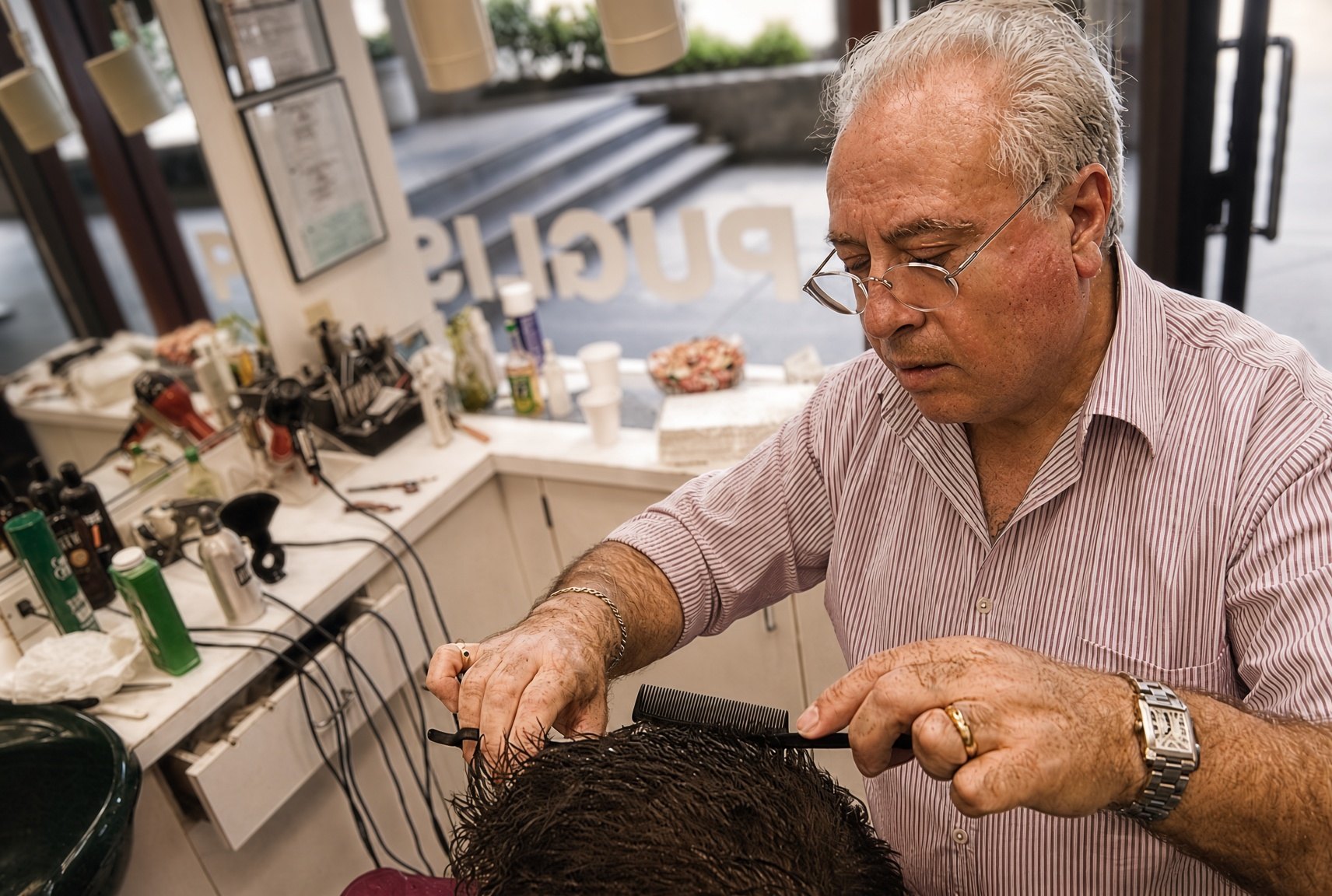
Tony Puglisi cutting hair beside the shop window

Tony Puglisi remembers the exact day the shop opened: April 23, 1960. The first chair stood in a townhouse at 2143 Pennsylvania Avenue — a building later replaced by glass and steel for the World Bank. He was a Sicilian immigrant who had apprenticed after the war because his mother wanted him to learn a trade, who had cut hair in Rome, who arrived in Washington with his wife Virginia speaking no English and looking, like so many before him, for a better life.

It has not changed. In 2019 a DCist reporter sat with Tony on a bench outside the shop and heard the same quiet certainty customers hear in the chair: do the cut the way they ask. Listen. Leave politics and religion alone.

As a teenager in Sicily, Tony watched barbers every day until someone finally told him he was ready. Rome came next. Then the Atlantic. Then Foggy Bottom when Foggy Bottom was, in his words to WJLA, a place of low income — “night and day” from the campus and office corridor it became.

He opened with his uncle-in-law. The uncle owned the building until 1982, a detail that mattered more than any style trend. In the 1970s, long hair emptied barber chairs across America. Many shops died. Puglisi’s survived because rent was survivable and because Tony and his uncle knew how to cut long hair — “It’s about framing the face,” he told DCist — while flattops of the 1960s gave way to whatever the decade demanded. A haircut that cost $1.50 drew complaints when it became $2. The complaints never stopped; neither did the work.

Around 1980 Tony took over the business from his uncle. Around 1990 the shop moved across the street to 2100 Pennsylvania Avenue, into the orbit of GW students who treated it as campus infrastructure. The GW Hatchet wrote in 2007 that Puglisi’s was famous for cutting the hair of former university president Stephen Joel Trachtenberg. Antique photographs and framed news lined the walls. Tony, then 67, shrugged at fancy unisex salons: they invent names to charge more, he said; they do not cut better.

By 2004 the shop had four barbers and a seventeen-dollar haircut. The Hatchet, writing the shop’s first history that spring, found weekly regulars, a family on its third generation of Puglisi cuts, and Tony’s memory of running fifty ROTC cadets through the chairs in batches. Its campus guide that June named the shop the value pick for a men’s cut and listed Stephen Joel Trachtenberg and Ben Stein among the customers.
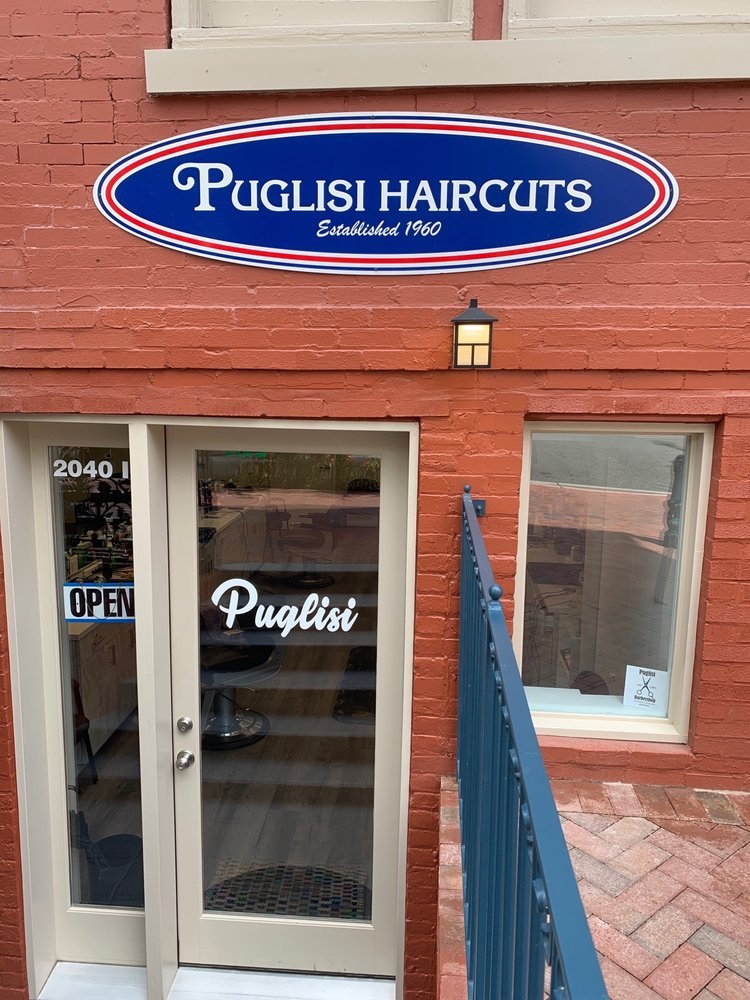
Current Puglisi entrance on I Street: cream door, oval sign, iron rail
02 / The third home

Down the stairs
on I Street.

2040 I St NW — English basement under the former Lindy’s Red Lion, next door historically to Captain Cookie and the Milkman.

Look for the oval on the brick and the barber pole. The door is a short flight below the sidewalk.

Addresses

Three doors.
One craft.

1960

2143 Pennsylvania Ave NW

Townhouse shop opens April 23. Flattops rule. Haircuts $1.50. Uncle-in-law owns the building until 1982.

~1990

2100 Pennsylvania Ave NW

Move across the street into GW’s orbit. Trachtenberg becomes a regular; by 2017 four university presidents have sat in the chairs. Framed press on the walls.

2017

The neighborhood question

GW and Boston Properties plan to redevelop 2100 Penn. Tony tells the Hatchet he will not reopen if he has to leave Foggy Bottom.

2019

2040 I St NW

Notice, an extension, then a lease in the Shops at 2000 Penn. PoPville tips the neighborhood in March; by June the chairs are downstairs on I Street.

2025

Saluted

Mayor Bowser’s salute for more than 65 years in business, and a Foggy Bottom–West End Main Street grant for the storefront.

“We are just barbers,” Tony told DCist when asked about the move. “Rent goes up, so we have to move. But it’s okay.” That sentence is the shop’s entire personality: unsentimental, durable, uninterested in branding itself as anything other than what it is.

By July 2019, WJLA found him at 78, still cutting on Friday and Saturday, still refusing retirement. “My mind says keep cutting (hair), my leg says slow down.” He told the station he was giving employees part of the business — succession not as a pitch deck, but as loyalty returned. “They are not my employees anymore.” Customers who had followed him for thirty years joked that the only problem was he kept moving.

The neighborhood changed around him. Hairstyles changed more. Fades, he said, take a long time; mistakes show. What did not change was the chairside ethic: listen, cut what was asked, keep the room free of politics and religion so nobody leaves upset. He has two daughters — a lawyer and a school teacher — and a marriage to Virginia measured in decades. It is an American story that still smells like tonic and clipper oil.

In October 2023, when the broadcaster and GW professor Michael Freedman died, the Hatchet called the shop. José Domingos remembered a weekly visitor and a friend; Antonio Puglisi was still the owner. That is the kind of place this is: the barbers get quoted in the obituaries.

Quotes from DCist, WJLA and The GW Hatchet. Every piece is linked on the Press page.

The price of a haircut

Sixty-six years,
one number.

What a cut has cost, decade by decade.

Haircut prices by year
YearPriceNote
1960$1.50Opening price.
2004$17The Hatchet’s shop history.
2007$20The Washington Post, “Six Barbershops That Make the Cut.”
2019about $30The Hatchet, on the move to I Street. Men and women, cash only.
2021from $35The Hatchet’s campus guide.
2026about $40Today. Cash.

The chair has the current number. Bring cash, and plan on the ATM nearby →

The chair

Where Foggy Bottom
sits down.

Sixty-six years on, Tony is still in the room. The barbers he hired decades ago hold the other chairs.

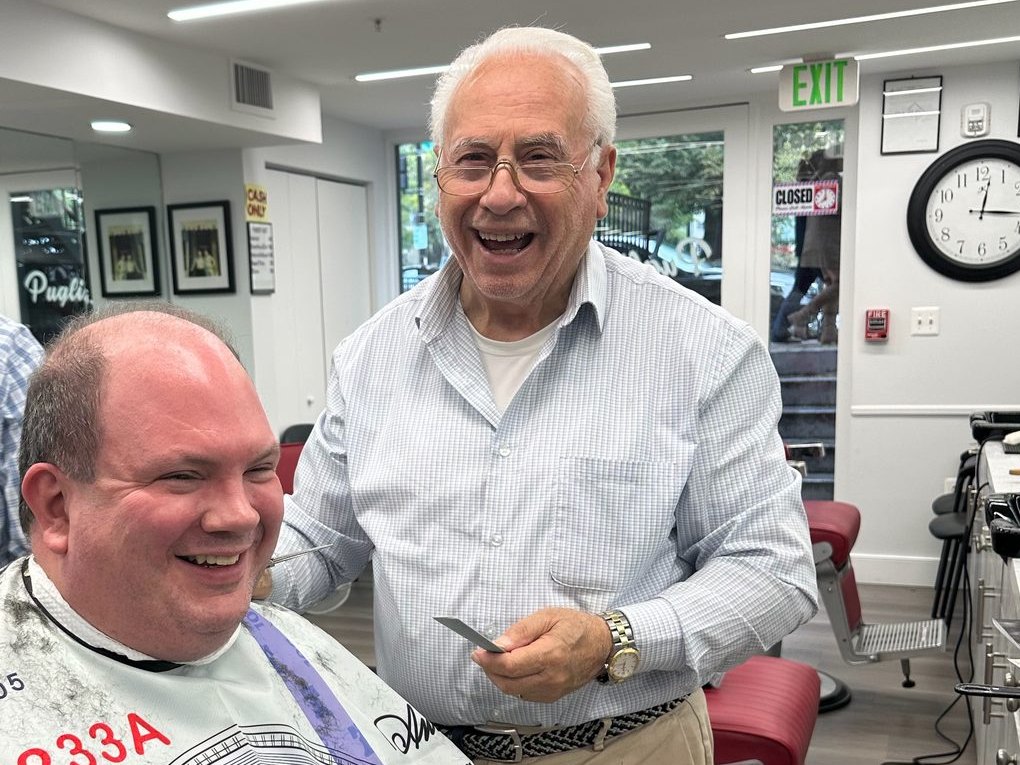
Tony Puglisi laughing beside a customer in the chair, October 2026
Tony Puglisi in the shop, October 2026
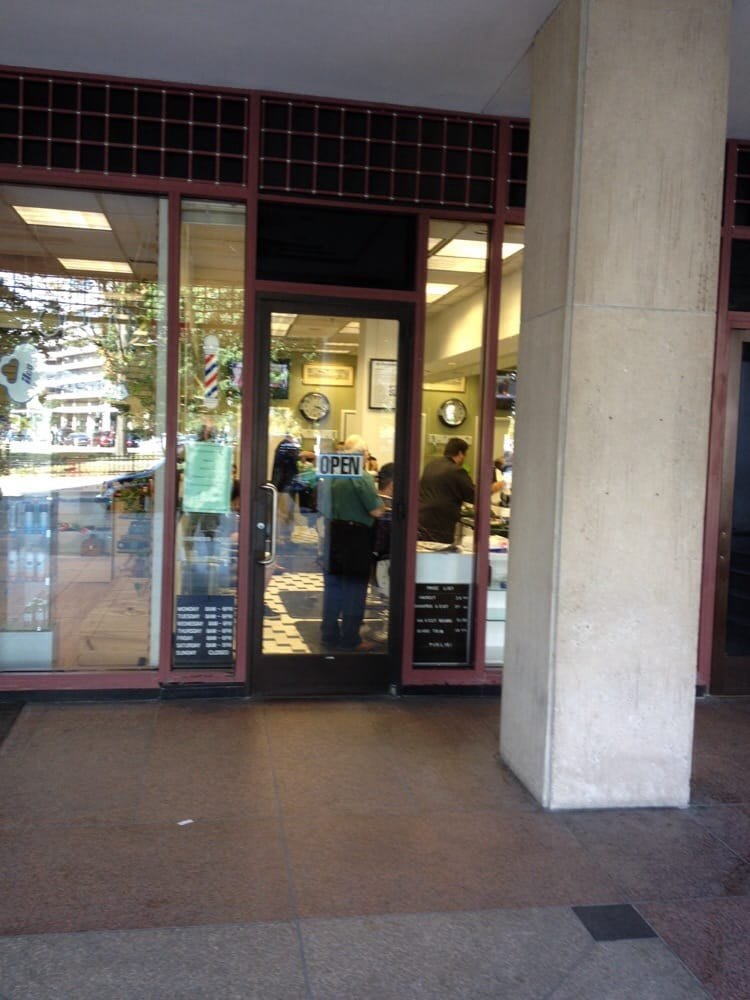
Archival storefront window showing hours and an older price list
The 2100 Pennsylvania Avenue storefront. The hours on the glass are the same today; the prices are not.
Next

The people
in the chairs.